Best Where kiwi is grown in Visakhapatnam, AP | RAYNAS AGROTECH
Best Where kiwi is grown in Visakhapatnam Frost Protection,Soil Management,Irrigation Systems
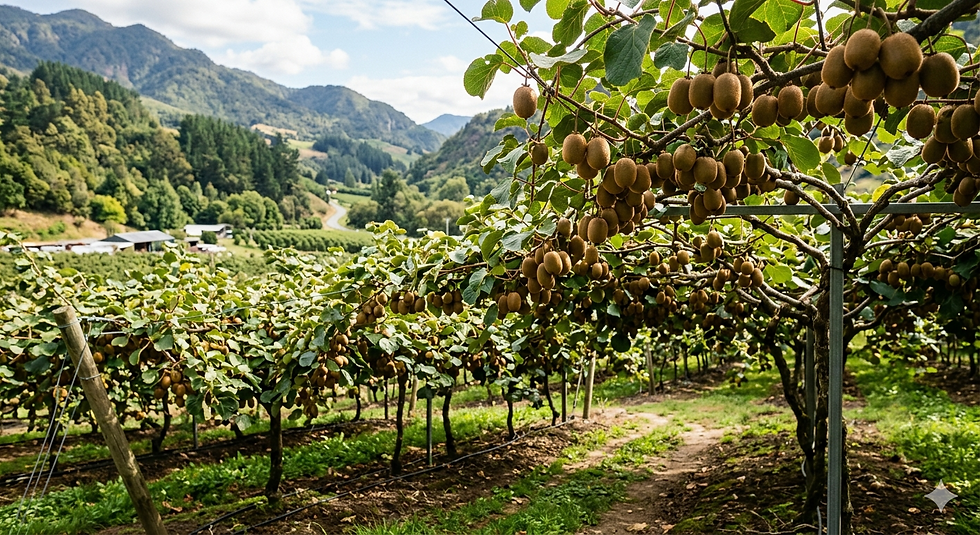
Kiwi fruit trees are highly dependent on climate, as their growth cycle requires a delicate balance of temperature, rainfall, and seasonal variation. They thrive best in temperate regions where winters are cool enough to provide the necessary chilling hours, yet not so severe that frost damages the vines. Spring must remain frost-free to protect tender buds and flowers, while summers should be warm but not excessively hot, ensuring proper fruit development. Rainfall or irrigation must be consistent, as kiwi vines have high water demands during the growing season. Without these climate conditions, kiwi trees struggle to produce healthy yields, making climate management one of the most critical aspects of successful cultivation. Farmers worldwide select regions with naturally favorable climates or adopt protective measures to replicate these conditions, ensuring the fruit’s quality and commercial viability.
Kiwi trees require 400–700 hours of winter chilling below 7°C to break dormancy and stimulate bud formation. This chilling period is essential for uniform flowering and fruit set. However, extreme cold or prolonged frost can damage vines, making frost-free winters and springs vital. During summer, kiwi trees prefer moderate warmth, as excessive heat can stress the plants and reduce fruit quality. Seasonal variation is equally important—cool winters allow vines to rest, while warm summers promote photosynthesis and fruit ripening. Farmers often plant kiwi at higher altitudes in warmer regions to achieve the necessary chilling hours. This careful balance of seasonal temperatures ensures that kiwi trees produce consistent yields, with fruits that are rich in flavor, nutrients, and market appeal.
Climate directly influences soil conditions, which are crucial for kiwi cultivation. Kiwi trees thrive in well-drained loamy soils with a slightly acidic pH between 5.5 and 7.0. Regions with consistent rainfall or access to irrigation systems are ideal, as kiwi vines require abundant water during growth. However, waterlogging must be avoided, as it can cause root rot and reduce productivity. Farmers often use mulching techniques to retain soil moisture, regulate temperature, and prevent weed growth. In dry climates, drip irrigation ensures steady hydration without over-saturating the soil. Climate also affects nutrient availability, with warmer regions requiring more careful soil management to maintain fertility. By aligning soil practices with climate conditions, growers create an environment where kiwi trees can flourish and produce high-quality fruit.
As kiwi trees are sensitive to climate fluctuations, farmers employ various methods to protect orchards. Frost protection systems such as wind machines, heaters, or protective covers safeguard vines during vulnerable spring months. Shade nets and rain shelters are used in regions with intense sunlight or heavy rainfall, preventing stress and disease. Windbreaks, often created with tall trees or artificial barriers, protect delicate vines from strong winds that can damage flowers and reduce pollination efficiency. Farmers also adopt climate-resilient varieties, such as hardy kiwis that tolerate colder conditions or SunGold varieties that adapt well to warmer climates. These adaptation methods ensure that kiwi cultivation remains sustainable, even in regions facing unpredictable weather patterns.
Best Where kiwi is grown in Visakhapatnam, AP.healthy flowering,high-quality fruit production temperate climate,well-drained loamy soil,organic soil fertility,frost protection methods,sustainable kiwi cultivation
Best Where kiwi is grown in Visakhapatnam, AP.|Frost Protection,Soil Management,Irrigation Systems